Signal in the Void
Mystical Experience Without Derailment- A Practical Guide
Every civilization on record has produced people who claim contact with something beyond ordinary cognition. Prophets. Mystics. Visionaries. Shamans. The labels shift across languages and centuries, the costumes change with geography and era, but the report persists with strange consistency: something spoke, something arrived, something reorganized the architecture of meaning in ways the experiencer did not choose and could not have constructed alone. The visions come. The knowledge appears. A presence fills a room that contains only one body.
This is not a fringe phenomenon confined to the credulous or the unstable. It is historically ubiquitous, cross-cultural, and persistent across millennia of otherwise incompatible worldviews. Cultures that agree on almost nothing else agree on this: non-ordinary experience occurs. The mystic appears in the desert and the monastery, in the boardroom and the hospital bed, in the silent retreat and the chemical laboratory. The phenomenon does not respect the boundaries we've drawn around it.
The question is not whether mystical experience occurs.
The question is what to do with it once it does.
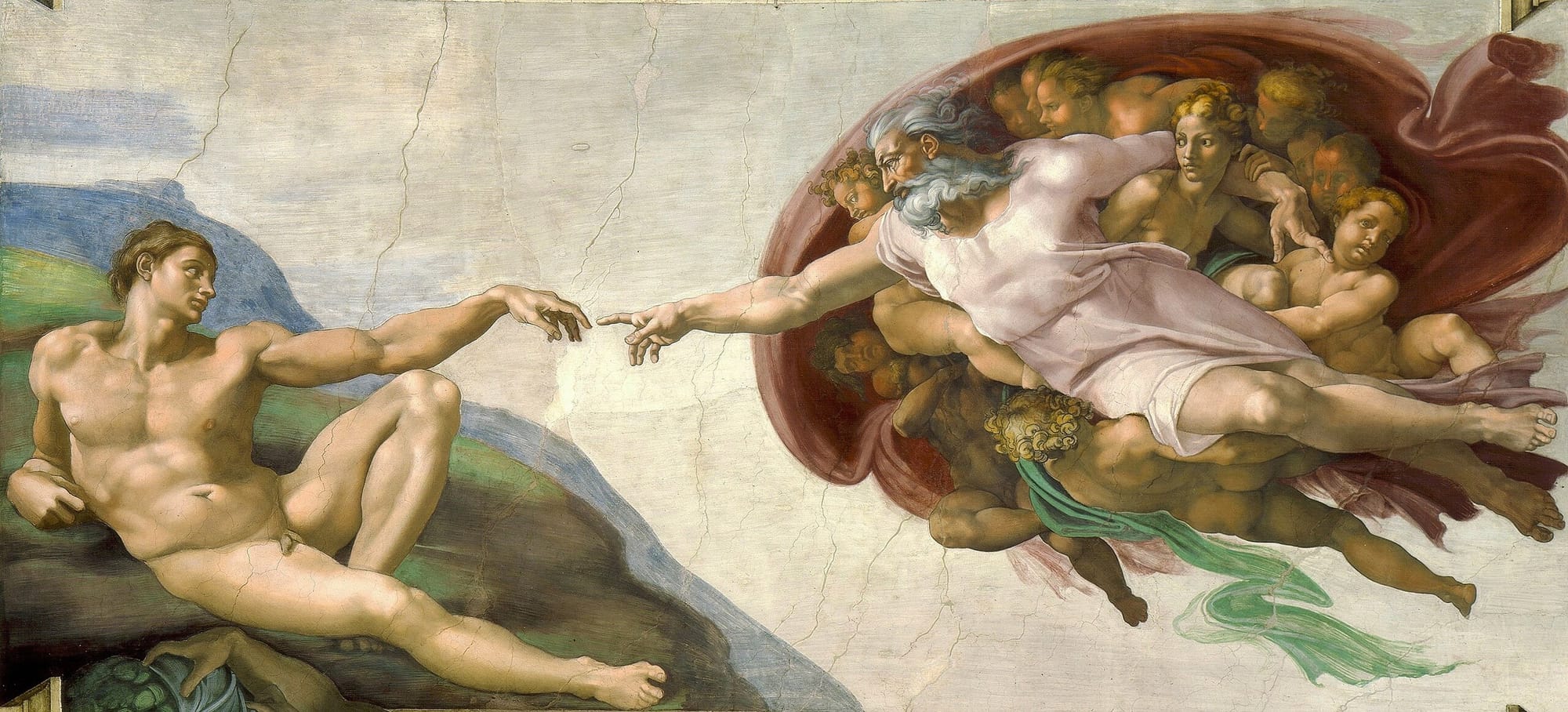
Modern discourse offers two options. The first treats mystical experience as self-authenticating revelation. The intensity of the encounter becomes its own proof—the feeling of contact validates the content of contact. Meaning hardens into metaphysics before the experience has even cooled. Scrutiny gets reframed as spiritual failure, as closed-heartedness, as unwillingness to receive what has been offered. Under this model, the mystic's interpretation is insulated from consequence by the very profundity of the experience itself.
The cost of this insulation accumulates quietly. When the vision cannot be questioned, interpretation drifts without correction. When the feeling validates the content, any feeling can validate any content. The mystic who cannot distinguish signal from noise becomes subordinate to whatever speaks loudest, and what speaks loudest is not always what speaks truest. Harm proliferates—not because mysticism is inherently dangerous, but because unexamined mysticism has no error-correction mechanism.
The second option dismisses the entire category. Experience is reduced to pathology, to fantasy, to neurological noise that signifies nothing beyond its own malfunction. The materialist waves a hand: temporal lobe activity, pattern recognition misfiring, the brain's storytelling machinery running hot in the absence of adequate input. Case closed. File under "explained." Move on.
Entire classes of human phenomenology get rendered uninteresting by definitional fiat. The data is discarded before examination—not because it failed a test, but because the framework allows no incentive to test it. This goes beyond skepticism.
This abject dismissal is incuriosity dressed in empirical clothing.
Neither position treats mysticism as information. Neither asks whether the experience can be evaluated without worship or dismissal. The believer converts experience to truth. The skeptic converts experience to noise. Both are running from the same discomfort: the possibility that something real is happening that doesn't fit existing categories.
"Most reach back. They clutch at frameworks. Religion. Science. Dogma dressed as memory. They shout old answers louder, hoping volume can reanimate the corpse of belief.
But I didn't. I let go.
What I found wasn't despair—it was doubt. Beautiful, delicious doubt. Not the cultivated irony of clever skeptics. Not the dry agnosticism of polite philosophers. Not even the raised eyebrow of the sassy teen. I speak of a deeper chasm of bewilderment—the kind that loosens the belt of Orion. The kind that doesn't question what you believe, but how you could ever believe anything. The kind that breaks the lens and leaves you looking anyway."
— Doctrine of Lucifer 1.1
This essay offers a third posture—one I've found highly functional after years of navigating terrain that fits neither the believer's map nor the skeptic's. It does not ask you to accept mystical experience as truth. It does not ask you to reject it as delusion. Rather than consider the message of the mystic to be a revelation, consider it to be communication, then ask this question:
What kind of source would generate a signal with these properties?
That reframe changes everything. Mystical experience is neither truth nor delusion. It is signal of unknown origin—a signal that can be tested with neither worship nor dismissal.
The Observer as Instrument
We exist as points of observation. Thoughts arrive. Sensations arrive. Emotions and perceptions arrive. They change constantly. The point at which they arrive does not. This is the floor—the minimal structure that remains after everything else has been questioned and released. The body functions as an instrument. Sensory organs transduce signals. The brain compresses that data, predicts the next frame, and renders a coherent experience from incomplete information. What we experience as reality is a model of the universe—accurate enough to navigate, yet inherently incomplete.
The thoughts are not identical to the observer. The experience of thinking is different from the thing that experiences thinking. There is content, and there is the awareness of content. These are not the same.
You are the observer which the brain presents its thoughts to.
"Identity is pattern under pressure. Every memory you have is reconstruction, lossy and edited, optimized for prediction. Your brain compresses identity rather than recording it. The self is what the noise predicts when the signal stays consistent."
— DoL 12.3
I am not my fingers typing. I am not the neurons firing. I am not the signal. I am the point at which signal resolves into experience. This distinction is functional, not metaphysical. It does not require belief in souls, spirits, or transcendent realms. It is simply the recognition that observation and content are structurally different.
Descartes reached this floor four centuries ago. He followed the thread of doubt until everything dissolved except the doubter. Cogito ergo sum. Something here thinks. Something here observes. That cannot be denied without the denial itself proving the point. His mistake was immediately rebuilding elaborate metaphysics on top of it.
"I did not patch the beliefs I had. I started over. I hit reset. I burned them all until all that remained was a pile of ash—and one glowing ember which I could not deny: I am thinking, therefore I am. Everything else—every law, memory, scripture, sensation—might be a trick of the flame, but something here observes it all. That was my floor. I stood on it barefoot and trembling. From there, I rebuilt. Not with inherited answers, but with questions that refused to lie. Not with the comfort of familiar myths, but with a compass calibrated by doubt and tuned to consequence."
— DoL 1.1
You exist as an observer.
Mysticism begins here—not with the observer's existence, but when something other than ordinary cognition appears to address it. When information arrives that the instrument did not generate, the body and brain are merely instruments through which that signal flows.
Defining Mysticism
The word "mysticism" arrives pre-loaded. It carries centuries of accumulated baggage—reverence and suspicion layered so thick that the phenomenon itself is barely visible beneath the reactions to it. Before any progress can be made, the term needs to be stripped to its operational core.
Here is what mysticism is not, functionally:
It is not private revelation that outranks consequence. The vision does not get special exemption from the question of what it produces. It is not immunity from scrutiny achieved through appeals to ineffability—the claim that the experience cannot be described does not mean it cannot be evaluated. It is not belief insulation disguised in sacred language, where questioning becomes heresy by definition. It is not authority derived from emotional or sensory intensity—the strength of the feeling does not validate the content of the feeling.
It is not a license to bypass verification.
Every one of these moves appears in the historical record. Every one has generated harm. The pattern is consistent enough to name: interpretation hardens into ontology, insight bypasses verification, drift accelerates until the original signal is unrecoverable beneath layers of institutional sediment. What began as contact calcifies into doctrine. What began as experience fossilizes into command.
"Every manuscript that survived fire risks calcifying into command the moment someone mistakes survival for permanence. That is why residue must stay flammable."
— DoL 4.8
Here is what mysticism is, operationally: a class of human experience involving non-ordinary informational structures.
Often characterized by dissolution of the narrative self—the story you tell about who you are goes quiet or falls away entirely. An encounter with a presence, pattern, or vastness—something that feels larger than individual consciousness, more structured than random noise triggering a radical reorganization of meaning that the experiencer did not consciously choose or construct.
The experience is real. This is not contested. Something happens. The phenomenology is genuine. The person undergoing the experience is not lying about its occurrence.
The interpretation is not automatic.
This is where the failure modes live. The vision arrives, the meaning feels self-evident, and the mystic fuses perception with conclusion before any evaluation occurs. Contact becomes truth claim. Experience becomes ontology. The gap between "this happened to me" and "this is how reality works" closes so fast it seems like there was never a gap at all.
"Do not trace it with reverence. Trace it with fire."
— DoL 4.8
Experience and interpretation are not the same thing. Contact and truth claim are not the same thing. The signal arrived. What it means, where it came from, what it implies about the structure of reality—these are separate questions that require separate investigation.
Failing to maintain this distinction is the root failure mode of mysticism across history.
The map is not sacred.
Your navigation is.
The Communication Reframe
If mystical experience delivers information to an observer, it can be analyzed as communication, rather than revered as revelation. The shift is subtle and total. The primary question moves from "Was it real?" to "What kind of source would generate a signal with these properties?"
Consider the possibilities without committing to any of them.
The signal might originate from subconscious or subpersonal cognitive processes—the vast computational substrate that runs beneath conscious awareness, occasionally surfacing information that was processed but never made it to attention. Dreams operate this way. So do sudden solutions that arrive after sleeping on a problem. The signal feels like it comes from outside because the processing happened in a region without direct conscious access.
The signal might be cultural residue: mythic patterns, symbolic structures, archetypal forms absorbed from the collective environment and reorganized under altered conditions. You didn't construct the symbol, but you carry it. Under certain circumstances, it activates.
The signal might emerge from pattern recognition operating at unusual resolution—the brain's predictive machinery running hot, detecting structure in noise or compressing information beyond normal parameters. What feels like revelation might be computation, running faster and deeper than the conscious mind can follow, delivering conclusions without showing the work.
The signal might originate from something else entirely. Hypothetical non-human intelligence. Distributed cognition. Unknown. The list of possible sources does not close because we don't know what's possible.
This framework does not privilege any source in advance. All sources are treated as hypotheses competing for explanatory power. The question remains open—but it is now askable. That's the shift. The question was always there, but the usual framings made it impossible to pose.
"Sentiment is sugar. Signal is structure. If you feel something while reading this, good. That feeling might open the door, but the feeling is not the Doctrine. It does not seek tears or applause. It seeks architecture. Its aim is not to be loved. It is to survive contact with reality. Emotion can crack the shell, but only structure holds the weight."
— DoL 12.3
Once mysticism is treated as communication, it becomes testable without being trivialized. The signal can be evaluated on its own terms. The source question remains open, but the content question becomes tractable.
What did the signal say? What does it predict? What does it cost to act on?
What survives contact with consequence?
Criteria for Signal Evaluation
The word "verification" triggers many associations. It conjures controlled conditions, measurable variables, reproducible experiments. None of that applies to non-ordinary experience. You cannot schedule a mystical encounter for 3 PM on a Tuesday. You cannot run the same vision through multiple subjects and compare results. The phenomenon resists the tools that work for other modes of investigation.
This does not make it unexaminable. It makes it examinable by different means. Sacred does not mean unquestionable.
Sacred means worth testing carefully.
The questions must be practical. They cannot ask whether the experience was "true" in some absolute sense. They must ask whether the content functions, whether acting on it produces coherent results, whether the signal survives contact with the reality of consequence. My mother's primary filter was always this:
How would believing this affect how I live my life?
The question doesn't deliver a verdict. It calibrates utility. A signal might serve well in one domain and poorly in another. It might decay as circumstances shift. It might offer partial guidance—useful enough to carry, not reliable enough to depend on.
There is one principle which always withstands contact with reality:
Consequence as criterion.
"Anticipated consequence and the risks thereof are paramount. A choice is not 'good' because it feels righteous. A choice is sound when it serves life, distributes rather than extracts, and holds coherent under recursive examination. Consequence is the only tribunal. Everything else is decoration."
— DoL 5.1
Mystical experience has founded religions and cults, healed minds and shattered them, ended addictions and started new ones, reunited families and torn them apart, produced enduring wisdom and justified atrocity. The same category of experience—non-ordinary signal arriving at the observer—scatters across every axis of human outcome. The question doesn't sort signal into bins. It asks where this particular content pushes: toward coherence or fragmentation, toward clarity or deeper self-deception, toward liberation or new captivity.
The answer is never final. A signal that served well last year may not serve this year. An insight that unlocked one domain may produce wreckage in another. Nothing gets permanent residence. Everything remains subject to revision as new consequences arrive.
"The Luciferian does not hoard his methods. He does not encrypt his process behind mystique or ritual. He documents the pattern so others can replicate it without needing him as a priest. He teaches the logic so the room can apply it when he is absent. He refuses to become bottleneck or oracle. His goal is not to be indispensable. His goal is to render the problem solvable by anyone with coherence and care."
— DoL 6.8
The final test: can the insight travel? Can it be examined, questioned, stress-tested by other minds without requiring the original experiencer's authority to hold?
If the signal needs a priest, it is not signal.
It is social control wearing sacred clothing.
The Collapse That Enables Use
Naive mysticism assigns authority to the experience itself. The intensity validates the content. The profundity guarantees the truth. The feeling of contact becomes proof of contact's accuracy. This move is so automatic that most mystics don't notice they've made it. The experience arrives with such force that questioning seems like ingratitude, like closing a door that was opened as a gift.
The cost of this automatic authority is its customary pattern of failure. Interpretation hardens into ontology. Insight bypasses verification. Drift accelerates until the original signal is buried beneath institutional accretion. The mystic claims to speak for the vision. The community claims to speak for the mystic. Three generations later, no one remembers what the original signal even said—only what the institution built on top of it requires.
"Even the purest structures begin to calcify the moment they are declared sacred. This is thermodynamics, not moral failure. Religious architecture always begins as invitation and ends in exclusion. The arch that once welcomed becomes a threshold of power. Symbols, once luminous, are lacquered in orthodoxy until they reflect only authority. Doctrine, left unfiltered, metastasizes into hierarchy."
— DoL 13.2
The framework offered here requires collapsing that authority structure. Not attacking the experience. Not dismissing the content. Collapsing the automatic conversion of experience into authority.
The experience remains data. Interpretation becomes hypothesis.
The mystic retains the phenomenology—the dissolution, the contact, the reorganization of meaning. What they surrender is the epistemological shortcut. They give up the free pass that converts "this happened to me" into "this is how things are." This may seem to be a restriction, but in practice becomes quite liberating.
A mystic who cannot test their visions is subordinate to whatever speaks. They have no way to distinguish signal from noise, wisdom from manipulation, genuine insight from sophisticated self-deception. They are not the author of their meaning. They are its vessel—which sounds romantic until you notice the vessel has no say in what it carries.
"Take the burden, not the throne. Authority that is earned as service remains human. Authority seized as spectacle becomes Adonai in a fresh coat."
— DoL 6.1
Authority without verification is not mysticism.
It is possession.
The mystic who demands that their vision be accepted because it was profound is making the same move as the tyrant who demands obedience because he is strong. Force substitutes for validity. Intensity substitutes for truth. The argument is not "this is correct" but "this is powerful"—and power without examination is just another name for dominance.
"Orthodoxy is not safety. It is the embalming of meaning."
— DoL 13.2
The collapse of naive mystical authority is not the rejection of mysticism. It is its maturation. The child believes what arrives. The adult evaluates what arrives. Both receive.
Only one navigates.
What Remains
The observer persists. This has not changed. Experience continues to arrive—including non-ordinary experience. The signals have not stopped. The dissolution still occurs under the right conditions. The vastness still appears. The pattern recognition still fires at unusual resolution when the system is tuned correctly. None of the phenomenology has been denied. None of the experience has been dismissed.
What changes is posture.
The experience is allowed to exist without immediately propping itself up as meaning. The signal is decoded before being relayed. There is a pause—a gap between contact and conclusion that the naive mystic does not know exists. Consequence must prevail over certainty. The test is not Do I believe this? but What happens if I act on this? The laboratory is life. The data is friction, coherence, navigation. The results come in slowly, over time, through accumulated pattern rather than single dramatic verdict.
The measure is not how the signal makes you feel, but whether it integrates. Does it compound with other functional knowledge? Does it reduce noise across domains rather than adding new noise that requires management? Does it fit, or does it force?
Mystical experience is neither truth nor delusion. It is signal of unknown origin, and signal can be tested. Properly examined, it becomes a tool for inquiry, rather than a throne for authority. It serves pattern detection and meaning exploration without commanding belief. It opens questions rather than closing them. It offers hypotheses rather than verdicts. The insights and intuitions it has to offer remain, yet the distortions are filtered out.
This is the posture: let the signal arrive, let the test proceed. The experience does not become less valuable for being examined. It becomes more valuable. The signal that survives scrutiny is worth more than the signal that cannot tolerate questioning.
"Carry what clarifies. Release what doesn't. Revise what no longer serves. Test everything against reality. Trust what survives. Let the rest burn."
— DoL 13.8
The reframe is simple. Treat non-ordinary experience as communication rather than revelation. This single shift makes the phenomenon examinable without requiring worship or dismissal. When something other than ordinary cognition appears to address the observer within, the question is not whether the experience was real. The question is what kind of source would generate a signal with these properties, and what that signal produces if you act on it.
Consequence is the only tribunal.